
BEYOND THE EXCHANGE RATE: CURRENCY MANIPULATION AS A CORE OPERATIONAL AXIS OF CHINESE LIMINAL WARFARE

MONETARY SUBJUGATION: THE PEOPLE’S BANK OF CHINA AS A WEAPON OF XI JINPING’S GREY ZONE STRATEGY
The geoeconomic landscape of early 2026 confirms that the People’s Republic of China (PRC) has succeeded in transforming its monetary policy from a macroeconomic tool into a fundamental pillar of “liminal warfare.” As detailed in the strategic report Europe Under Attack 2025, Beijing’s global strategy is based on occupying the “gray zone”: systematically operating below the threshold of open conflict to erode the industrial and sovereign foundations of Western democracies. In this context, the renminbi (RMB) is no longer merely a medium of exchange, but a tactical tool used to finance technological self-sufficiency and the acquisition of critical infrastructure, acting as a force multiplier that allows the PRC to project its power without resorting to kinetic means.
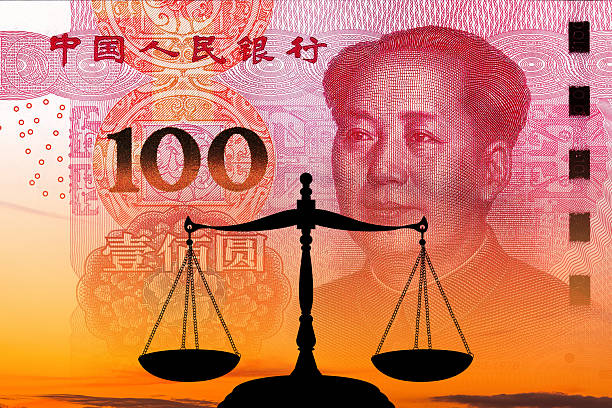
IMF Technical Analysis and the 16% Hidden Subsidy
A critical pillar for deciphering this threat is the technical report released by the International Monetary Fund (IMF) in February 2026. The analysis certifies that the Yuan remains structurally undervalued by approximately 16% relative to its economic fundamentals. This discrepancy is not the result of spontaneous market dynamics but rather a deliberate orchestration that exploits weak domestic production prices to maintain an artificial competitive edge for Chinese exports. This is particularly evident in strategic sectors such as semiconductors, lithium-ion batteries, and Artificial Intelligence. This 16% gap functions as a permanent, occult state subsidy, allowing Chinese firms to absorb the impact of Western tariffs while draining capital from international competitors and financing Beijing's transition toward dual-use (civilian-military) technological supremacy.
The Subjugation of the People's Bank of China to the Control of the CCP and Xi Jinping
A decisive factor in the effectiveness of currency manipulation within the framework of liminal warfare is the progressive and total erosion of the independence of the People's Bank of China (PBOC). Under the leadership of Xi Jinping, the central institution has undergone a genetic mutation, evolving from a technical supervisory body into an operational arm of the Chinese Communist Party (CCP). Through institutional reforms that culminated in 2023 with the creation of the Central Financial Commission, Xi Jinping formalized the Party’s direct control over every macroeconomic decision, eliminating any buffer between political objectives and monetary stability.
This centralization has transformed the PBOC into an instrument of "financial sovereignty," aimed not at supporting a free market, but at regime protection and the financing of technological supremacy. In this context, the Yuan's exchange rate no longer responds to the mechanisms of supply and demand; instead, it is "piloted" according to the ideological directives of the Central Committee. This shift renders Chinese monetary policy a mere extension of national security strategy and a weapon for outward geopolitical pressure.
The Mosbacher Model and the Mechanics of Currency Intervention
Technical understanding of this manipulation requires the application of the analytical model developed by the Mosbacher Institute, based on the real exchange rate formula where the nominal value is a function of the ratio between domestic and foreign prices (E = e* (p/ p)*. Throughout 2026, China has refined the use of this equation to neutralize inflation differentials, ensuring that the real exchange rate remains consistently favorable to its mass exports. Despite the US Treasury’s decision to keep China on its "Monitoring List" due to chronic opacity, the People’s Bank of China (PBOC) continues to engage in direct, non-transparent market interventions. These actions prevent the Yuan from reflecting massive trade surpluses, creating a systemic distortion that thwarts any natural rebalancing of the global market.
Operational Architecture: From Currency Dumping to Strategic Dependency
The effectiveness of the Chinese strategy lies in how currency manipulation facilitates the various conducts of hybrid warfare. The artificially generated surplus provides Beijing with the financial liquid assets necessary to implement the "Digital Silk Road" and acquire strategic European assets, such as deep-water ports and telecommunications networks. This mechanism allows the PRC to transform trade advantages into geopolitical leverage, creating debt traps and technological dependencies. By using the nominal stability of the Yuan as bait, Beijing draws emerging economies into currency swap agreements that, in the long term, erode the dollar-based financial order and isolate transatlantic partners, effectively weaponizing the global supply chain through monetary control.
Information Warfare and the Dialectics of "Market Stability"
The PRC’s official response in May 2026 represents the cognitive layer of Liminal Warfare. Beijing attempts to flip the narrative by labeling Western "mirror tariffs" as the primary cause of global instability, while portraying the Yuan as a "stabilizing force" for globalization. However, the tactical nominal appreciation of the Yuan recorded in April is designed solely to confuse international observers and forestall more severe sanctions. Beijing aims to undermine multilateralism by invoking it hypocritically to defend aggressive mercantilist practices. This narrative seeks to mask systemic currency dumping as mere "technological progress," a classic liminal tactic designed to create policy paralysis within Western governments.
Security Implications and the Necessity of a Coordinated Response
In conclusion, the Chinese Yuan in 2026 must be viewed as a high-stakes tactical asset supporting the full spectrum of PRC hostile activities in the grey zone. The 16% undervaluation identified by the IMF is not a mere statistical datum; it is the financial engine of an industrial and technological encirclement maneuver designed to make the West structurally dependent on Beijing. For intelligence agencies and governments, it is imperative to recognize that every transaction mediated by a manipulated currency contributes to the funding of a system that seeks to dismantle open markets. Without a coordinated strategy that enforces transparency on PBOC flows and recalibrates trade relations based on real exchange values, the PRC will continue to exploit international rules to dismantle them from within, achieving dominance through the silent erosion of the global economic order.


Commenti