
THE DRONE TRIANGLE: BEIJING, MOSCOW, TEHRAN, AND THE FLOW OF LIMINAL WARFARE
- Nicola Iuvinale
- 7 mag
- Tempo di lettura: 3 min

THE INVISIBLE ARSENAL AND THE NEW EURASIAN ORDER
We are witnessing the greatest geopolitical shift since the Second World War. In a world where the boundaries between peace and conflict are increasingly blurred, China has erected a "Great Logistics Wall" that acts as the central nervous system of the Eurasian war machine. This OSINT report by Extrema Ratio reveals how Beijing is not merely exporting goods but is providing the technological lifeblood necessary for Russia and Iran to sustain a war of attrition against the Western order. Through a network of land and sea routes that defy naval blockades and sanction regimes, critical components—often disguised as civilian goods—travel from Chinese industrial hubs to assembly labs in Moscow and Tehran. This represents the victory of industrial might over coercive diplomacy: an ecosystem where the control of microchip and motor flows decides the outcome of modern conflicts before troops even hit the ground.
According to recent investigations and customs data updated to May 2026, the flow of Chinese components to the drone programs of Russia and Iran has reached unprecedented volumes. China continues to send massive supplies of "dual-use" goods, which are fundamental for the construction of Shahed attack drones and the FPV (First Person View) drones that currently dominate the Ukrainian battlefields.
The Component Arsenal: Beyond Sanctions
The heart of this supply chain does not lie within Chinese state giants, but in a galaxy of small, "agile" companies operating outside the dollar-based financial system.
Motors and Propulsion: Chinese companies continue to supply engines (such as the Limbach L550, originally a German design but produced under license or via reverse engineering in China) essential for long-range drones.
Critical Electronics: Microchips, voltage converters, satellite navigation modules, and gyroscopes arrive by the thousands, often labeled as civilian components for the automotive or toy industries.
New Frontiers: Significant spikes have been detected in the export of lithium-ion batteries and fiber optic cables—the latter being vital for the new generation of Russian drones resistant to electronic warfare (EW).
Fuel and Precursors: Beijing has opened the tap for ammonium perchlorate, a chemical indispensable for solid rocket motor propellant.
The Evasion Routes: How Parts Reach Iran
While the West focuses on controlling energy flows, Beijing and Tehran have consolidated a logistical network that systematically bypasses traditional pressure points. By avoiding the sensitive transit through the Strait of Hormuz, components follow three main arteries:
1. The Trans-Asian Railway Corridor (The Terrestrial Silk Road)
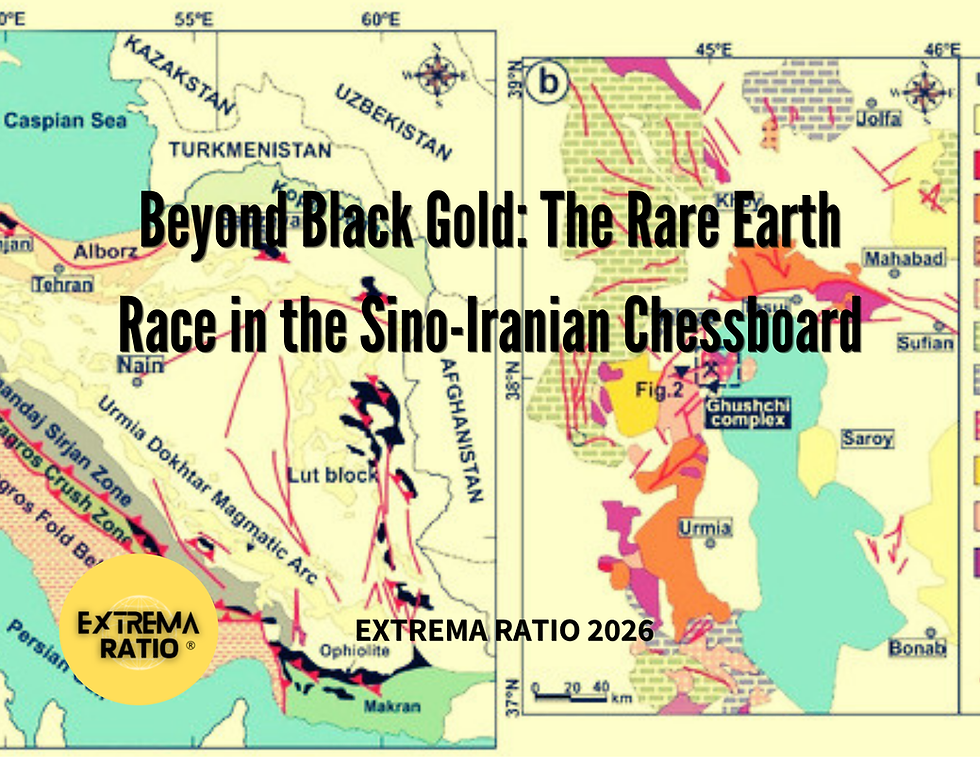
Containers loaded with microelectronics depart from industrial districts in Xinjiang (Kashgar) and cross Kazakhstan and Turkmenistan. They enter Iran through the Incheh Borun and Sarakhs crossings. This route is entirely immune to Western naval interceptions and allows a constant flow of parts to Iranian assembly centers.
2. The Chabahar Gateway (Indian Ocean)
The port of Chabahar, located in the Gulf of Oman, has become a vital maritime hub. Positioned outside the Strait of Hormuz, it allows Chinese vessels to offload strategic materials without entering high-risk patrol or blockade zones. From here, components travel by land toward Tehran and various launch bases.
3. The Caspian Connection (The Northern Route)
A significant portion of Chinese cargo is transported by rail to Kazakh ports (such as Aktau) on the Caspian Sea, then loaded onto ships bound for the Iranian Caspian ports of Anzali or Amirabad. This "internal" route is the most secure and protected from any external interference.
The Russian Front: Integration and Triangulation
For Moscow, Chinese support has been the catalyst that allowed it to shift the bulk of Shahed drone production to Russian soil (specifically in the Alabuga Special Economic Zone). Beyond direct routes, Beijing utilizes triangulation through shell companies in Southeast Asia and Hong Kong to mask the final destination of components, making tracking nearly impossible for Western customs authorities.
Conclusion: The Realism of Industrial Power
For Extrema Ratio, China’s ability to simultaneously sustain two advanced warfare programs marks the failure of "bloc diplomacy." The "Great Wall of Components" has created a strategic asymmetry: low-cost Chinese technology is neutralizing expensive Western defense systems. This is the face of the new Eurasian sovereignty: an order where logistics is the supreme weapon and the control of technological flows decides the fate of conflicts.
About Us: Extrema Ratio is a geopolitical and military analysis platform specializing in Open-Source Intelligence (OSINT) on Beijing’s liminal global power and provides consultancy to governments, institutions, and companies. We monitor technological evolution and global conflicts to decode the complexity of modern warfare, power dynamics between superpowers, and Chinese Liminal Warfare. Our analyses are cited in various international institutional contexts and are cataloged at the Library of the US Congress and Stanford University.
Intelligence and Analysis at: www.extremarationews.com
All right reserved
Commenti