
Extrema Ratio: Operation Delta Force, and the economic earthquake threatening $100 billion in Chinese investments

Oil, satellites, and bad loans: the balance sheet of Chinese risk after the fall of Caracas
The sudden U.S. military action on January 3, 2026, and the subsequent capture of Nicolás Maduro represent a definitive breaking point for the architecture of Chinese interests in South America. For Beijing, Venezuela was not merely a commercial partner but the cornerstone of a multidimensional strategy aimed at creating a Belt and Road Initiative outpost at the doorstep of the United States. In-depth analysis of diplomatic and commercial documents reveals such profound exposure that the fall of the regime jeopardizes decades of geostrategic planning.
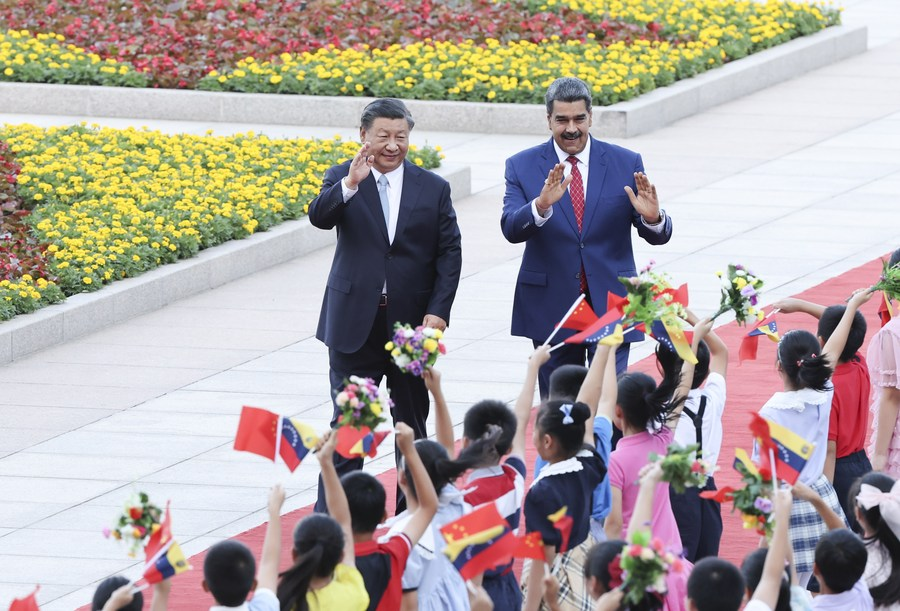
The relationship between China and Venezuela underwent a radical transformation in 2007 when a $6 billion joint fund was established between the China Development Bank and El Fondo De Desarrollo Nacional. This mechanism, which provided for loan repayments through crude oil shipments managed by PDVSA, became Caracas's financial lifeline. Between 2007 and 2016, Beijing invested over $105.6 billion. Commercial intelligence emphasizes that China, having transitioned from an exporter to a net importer of oil in 1993, viewed Venezuelan reserves as a guarantee of national security, covering approximately 4% of its total requirements through the oil-for-loans model.
However, the collapse of crude prices in 2014 strained this model. To prevent a Maduro default, Beijing had to restructure nearly $50 billion in debt in 2015, reducing the shipment obligation to 330,000 barrels per day and accepting repayments in local currencies. Despite these difficulties, bilateral trade showed surprising resilience, reaching $6.4 billion in 2024 with an annual increase of 52.5%. Chinese imports from Venezuela jumped by 119.2% shortly before the U.S. operation, a sign that Beijing was accelerating debt recovery through iron ore and organic chemicals.
A critical aspect concerns the advanced technological cooperation formalized in September 2023. During Maduro's state visit to Beijing, numerous memorandums of understanding were signed, notably those for satellite image processing and digital transformation. This agreement did not have purely civil purposes because it included Venezuela's participation in the International Lunar Research Station led by China. Caracas had provided its own ground stations for satellite control, offering China a space monitoring infrastructure in the Western Hemisphere. Maduro's fall exposes these technologies and the continuity of such missions to U.S. control, which could now access sensitive data on the Sino-Venezuelan digital network.
Military cooperation between Beijing and Caracas has equally deep roots, officially beginning in 1981 with the exchange of military attachés. Over the years, top figures such as General Fu Quanyou and General Chen Bingde visited Venezuela to coordinate defense, while in 2018, Defense Minister Padrino participated in the Xiangshan Forum in Beijing. The presence of the hospital ship Peace Ark and constant participation in joint exercises demonstrate how China had invested in Venezuela to create a long-range strategic deterrent and a Great Wall against American hegemony.
Just hours after Maduro's capture, U.S. President Trump urged American oil companies to prepare to make money for America, marking the beginning of a potential ousting of China from the local energy sector. The Chinese Ministry of Foreign Affairs responded with an official condemnation, calling the operation a violation of the principles of the UN Charter. For Beijing, the challenge is twofold: on one hand, the risk of having over $100 billion in debt declared illegal by the new government, and on the other, the loss of a fundamental logistics hub for the Belt and Road Initiative in South America. Without Maduro, China loses its most loyal ideological ally in the region, exposing the fragility of a strategy based on massive loans to illiberal regimes in exchange for natural resources. Intelligence suggests that Beijing will now attempt a difficult diplomatic mediation to safeguard at least the railway infrastructure and communication networks already built, but Chinese bargaining power in Caracas has never been lower.
Commercial and Geopolitical Intelligence Observation
From a commercial intelligence perspective, the collapse of Maduro's regime represents the greatest risk of political default in the 21st century for China. Credit exposure in excess of $100 billion not only represents a massive budget shortfall but also the definitive loss of contractual leverage over critical raw materials guaranteed for almost 20 years by the oil-for-loans model. The diversion of Venezuelan crude oil to the US market compromises Beijing's energy security, depriving it of about 4% of its total supply and nullifying decades of debt restructuring aimed at stabilizing energy flows. There is also an imminent risk of technological compromise, as the Sino-Venezuelan digital and satellite architecture integrated into local ground stations is now vulnerable to signal intelligence and reverse engineering operations by the US. Geopolitically, the end of the Maduro era forces Beijing into a strategic retreat from Latin America or a pragmatic recalibration of relations with new regional players in a context where the Monroe Doctrine seems to have regained unprecedented operational force.


Commenti